Monday, January 19, 2009

llinois lawmakers push bill aimed at puppy mills


January 19, 2009

CHICAGO - Two Illinois lawmakers are pushing legislation aimed at cracking down on puppy mills.

Chicago Rep. John Fritchey and Sen. Dan Kotowski of Mt. Prospect announced the legislation over the weekend. It's called "Chloe's Bill" after a dog rescued from an unlicensed puppy mill in downstate Macon County.

Read more here...

Sunday, January 18, 2009

Lawsuit begins with end of parrot

The starvation death of a macaw is raising some constitutional questions about the rights of accused persons unlucky enough to wind up at one Delaware correctional facility. Read more about the disturbing allegations concerning the slow demise of a 20-year companion underlying one inmate's recent lawsuit in this Delaware News Journal article by Sean O'Sullivan.

Friday, January 16, 2009

‘The Price is Right’: Barker Gives $1M for Animal Rights Law at UVA

Posted by Dan Slater
January 14, 2009

Fans of “The Price is Right,” the longest running daytime game show on television, may remember host Bob Barker’s signature sign-off: “Help control the pet population; have your pet spayed or neutered.” Barker, also a longtime host of the Miss Universe Pageant, quit the pageant in 1987 when those in charge refused to stop giving away fur coats as prizes.

Now Barker (not a lawyer), who retired last year, is keeping his animal rights drive alive, with a $1 million gift to the University of Virginia to establish an animal law program at its law school.

Click here to read more...

Monday, January 12, 2009

Companion animals worth at least as much as your vet bills, says Illinois Appellate Court

A very good ruling from the 4th District recently... just came online today:

Leith v. Frost involved a plaintiff couple who sued their neighbor after the neighbor's Siberian Huskie got out of his yard and mauled their Dachshund. The trial court found Frost liable, but limited the Leiths' damages - which totaled more than $4,700 in vet bills - to $200. The trial court cited traditional common law limiting the cost of repairs for inanimate property to market value.

On appeal, the Fourth District reversed. It noted:

Even if it were true that anyone would pay $200 for a 7 1/2-year-old dachshund that is not a show dog, the reality is that Molly had merely nominal value at the time of the injury. A reasonable person in defendant's position should have
reasonably foreseen that if his dogs escaped from their enclosure and injured plaintiffs' family pet, plaintiffs would feel compelled to pay considerably more than a nominal amount for veterinary care. It is common knowledge that people are prepared to make great sacrifices for the well-being and continued existence of their household pets, to which they have become deeply attached. They feel a moral obligation toward these animals. Emotionally, they have no choice but to lay out great expenditures when these animals suffer a serious physical injury.


The court found that Molly must have been worth to the Leiths at least what they paid in veterinary bills, and modified the trial court's judgment to $4,784 so as to prevent the award from being nominal.

Well, yay! And it's about time.

I've gotten similar results at the trial level in the past (which the clients liked, but obviously lacked much precedential value for anyone else). This is the first such appellate pronouncement in Illinois. The Illinois court relied on the reasoning of a Kansas appellate court of Burgess v. Shampooch Pet Industries, Inc., 35 Kan. App. 2d 458, 463, 131 P.3d 1248, 1252 (2006). Hopefully, more states will follow (and expand!) upon their reasoning.

Menatime, kudos to plaintiff attorney Nick Burgrabe - way to go, Nick!

Sunday, January 11, 2009

Miscellaneous Round-up

A nice article yesterday about the problems with the intensive confinement farming of pigs. Not that there was anything particularly unusual about the content. But it was printed somewhere where you might not expect to see it... the Taipei Times. Very gratifying to see these issues are really starting to gain global attention, even though it may still be many years (and many more millions (or more...) of animals) before any real change comes.

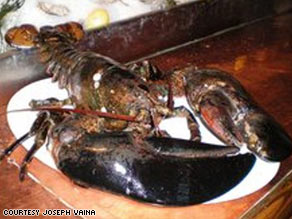
Closer to home... a very fortunate turn of the "tables" for one marine critter; George the giant lobster is tasting freedom on the floor of the Atlantic Ocean in Maine. PETA convinced a New York City restaurant to release George yesterday from the tank where he was confined before anyone ordered him for dinner. Read more on CNN.com.

Thursday, January 08, 2009

Why Are Deer Being Smuggled into Texas?

With a headline like that, you're probably figuring it's so hunters have more wildlife to shoot. You'd be right. The latest issue of Time Magazine says that "[d]eer-breeding is the fastest-growing industry in rural America" according to a 2007 Texas A&M study. Moreover, deer in northern parts of the U.S. tend to grow bigger, which makes them more valuable prizes to the hunters who kill them. Of course, where there is demand, someone will step up to supply.

It's illegal to bring deer into Texas, but that apparently is not stopping anyone. Not only is there a thriving deer-breeding industry, deer-smuggling is alive and well (Well, as an industry. Not so much for the deer, really.)

Time writer Hilary Hylton notes various concerns that this raises: the fact that smugglers undercut the prices of Texas deer breeders, the threat of bringing wasting diseases and so forth across state lines, and of course, the historical dislike of outlaws (think old west cattle smugglers).

But not one quote from anyone who thinks the ban shouldn't just be against bringing deer into the state, but rather shooting them at all. While the article notes an interesting social dilemma (the free market at work and what are legally protectible state interests (ie: disease prevention) versus not-so-much (ie: favoring in-state businesses), it's really hard for me to look at the weighing of factors here and not also think about the value of protecting animals from cruelty... or wonder how that can be left out of the weighing process completely? Personally, it is even more difficult for me to have any empathy for the concerns about underpricing or even wasting disease when there does not seem to be any empathy whatsoever to those most harmed of all. Sad.

Tuesday, January 06, 2009

Can ban on crush videos withstand the Supreme Court?

Less than a decade ago, Congress outlawed so-called "crush videos" - depictions of people harming, and usually killing, small animals. In so doing, lawmakers took the unusual step of creating another category of speech that is considered to have no social value at all, and therefore, is completely unprotected by the constitution.

While anyone reading this blog would likely agree with that sentiment, well, of course, others don't. Who, you ask? For one, Robert Stevens. The case of Stevens v. State is winding its way up through the court system. Stevens was convicted of selling videos of dogfights, but the Third Circuit reversed the conviction, holding that the ban violated Stevens' First Amendment rights.

The Solicitor General asked the Supreme Court to hear the case last month. No word yet if it will. In the meantime, read more in this New York Times piece by Adam Liptak.

Monday, January 05, 2009

California Pet Store Animal Care Act takes effect...

Ok, ok... it would have been better if they enacted the Pet-Stores-Are-Banned Act... but I am a firm believer that baby steps are better than sitting around waiting for the world to come around entirely. Anyway, read more in this Press Democrat article by Steve Hart.

Sunday, January 04, 2009

What happened to Michael Vick's dogs ...

If you haven't had a chance yet to pick up last week's issue of Sports Illustrated, check it out before it retreats to the obscurity of library shelves. The feature article updating readers on the current condition and whereabouts of the infamous Vick dogs is even more encouraging (as more time passes as the dogs are doing better) and more bittersweet (as more time passes and it becomes clearer that most of the dogs will never completely get over their trauma) than previous features on these amazingly resilient animals.

As writer Jim Gorant reminds, even PETA and HSUS thought the dogs were beyond rehabilitation and it was a waste of time and money to try. "If you're a dog and People for the Ethical Treatment of Animals suggests you be put down, you've got problems." But as Gorant goes on to describe, the 47 of 51 dogs that were rescued have made remarkable progress.

For me though, what happened to the Vick dogs goes beyond the realm of a feel-good animal welfare story. It's pushing the boundaries of animal law in incremental steps that may not be grabbing the big headlines, but is definitely changing the way the legal system perceives and handles these issues.

For example, each dog was individually evaluated and placed based upon a series of factors that can fairly be described as the best interests of the dog. You just don't get that with the cars, boats, paraphernalia and other items seized in drug busts.

Gorant described another moment in the case:

"On Aug. 23, 2007, Vick appeared in U.S. District Court in Richmond, and Judge Hudson accepted a plea agreement in which the former quarterback admitted that he had been involved in dogfighting and had personally participated in killing animals. The agreement required him to pay $928,000 for the care and treatment of the dogs, including any humane destruction deemed necessary. "That was the landmark moment -- when he not only gave the dogs the money but referred to it as restitution," says Zawistowski. "That's when these dogs went from weapons to victims."

That's big.

Animal law scholars have argued for years that animals should, if not be accorded full "person" status under the law, at least be granted some sort of elevated property status that recognizes, once and for all, that a dog is not the same as a table or a lamp, no matter what the Pennsylvania Supreme Court affirmed in Desanctis v. Pritchard, 818 A.2d 504 (Pa. 2003). The actions of Judge Hudson go a long way toward demonstrating how the law should, and imho eventually will, evolve.

Hats off again to Ben Stein!

Ok, I am definitely starting to notice a trend here...

For the second time in about as many weeks, Ben Stein urged people to treat animals (among others) well in his CBS Sunday Morning commentary. Cool.

Friday, January 02, 2009

Shelter may kill dog; family says it's surprised

By Josh Shaffer
jshaffer@newsobserver.com

Thursday, January 01, 2009